OGI Member Focus Session at Moyleabbey Organic Farm & Teagasc Oak Park Orchard
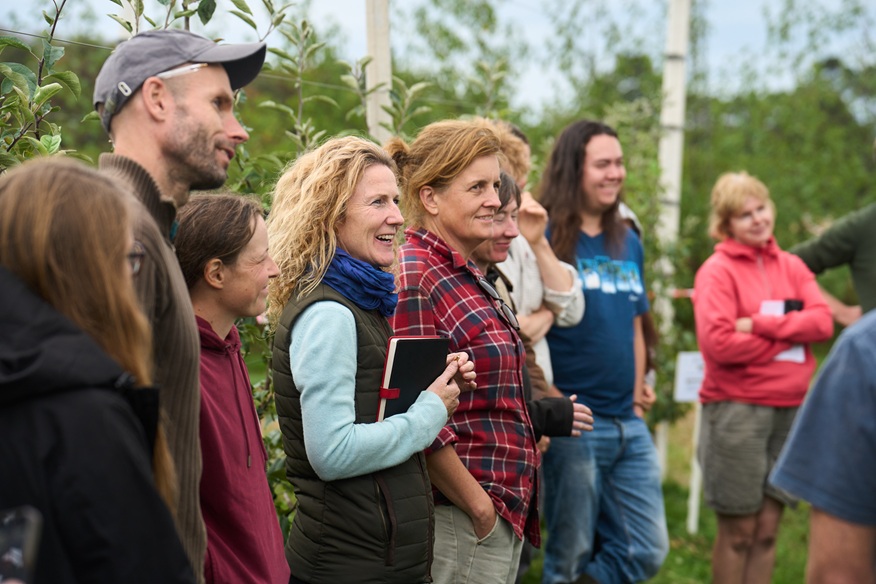
On Tuesday 1st September, more than 20 OGI members came together for two-part focus session day, exploring the practicalities of direct-selling fresh produce at Moyleabbey Organic Farm in south Kildare, and the research driving Ireland’s apple sector at Teagasc Oak Park Orchard in Carlow. OGI Membership Coordinator, Shóna Patterson, reports on this sold-out event combining hands-on farm knowledge with the latest in orchard research.
Moyleabbey Organic Farm
The day began at Moyleabbey Organic Farm, where we were treated to a morning full of invaluable information from Liam Ryan and his team. Moyleabbey Farm has been growing and selling organic produce for over 20 years. Their model is based on direct selling, the unique selling point being to provide produce that is harvested fresh and made available quickly to ensure the highest quality produce, sold with a personal touch.
18 crops are grown on farm, mainly focusing on high-value crops such as purple sprouting broccoli, rhubarb, strawberries, and sweetcorn. Any remaining produce is sourced from other local growers, as well as a small amount of imported produce.
The tour of the farm started with the tunnels — relative to the overall size of the farm (5 acres in production at any one time), there is a relatively small amount of tunnel space. The most productive crop in the tunnels is French beans, accompanied by tomatoes and cucumbers. The bed of viola flowers really stood out, and these are Liam’s favourite flowers, as they harvest and last really well, keep producing, and give the salad bags a lift.
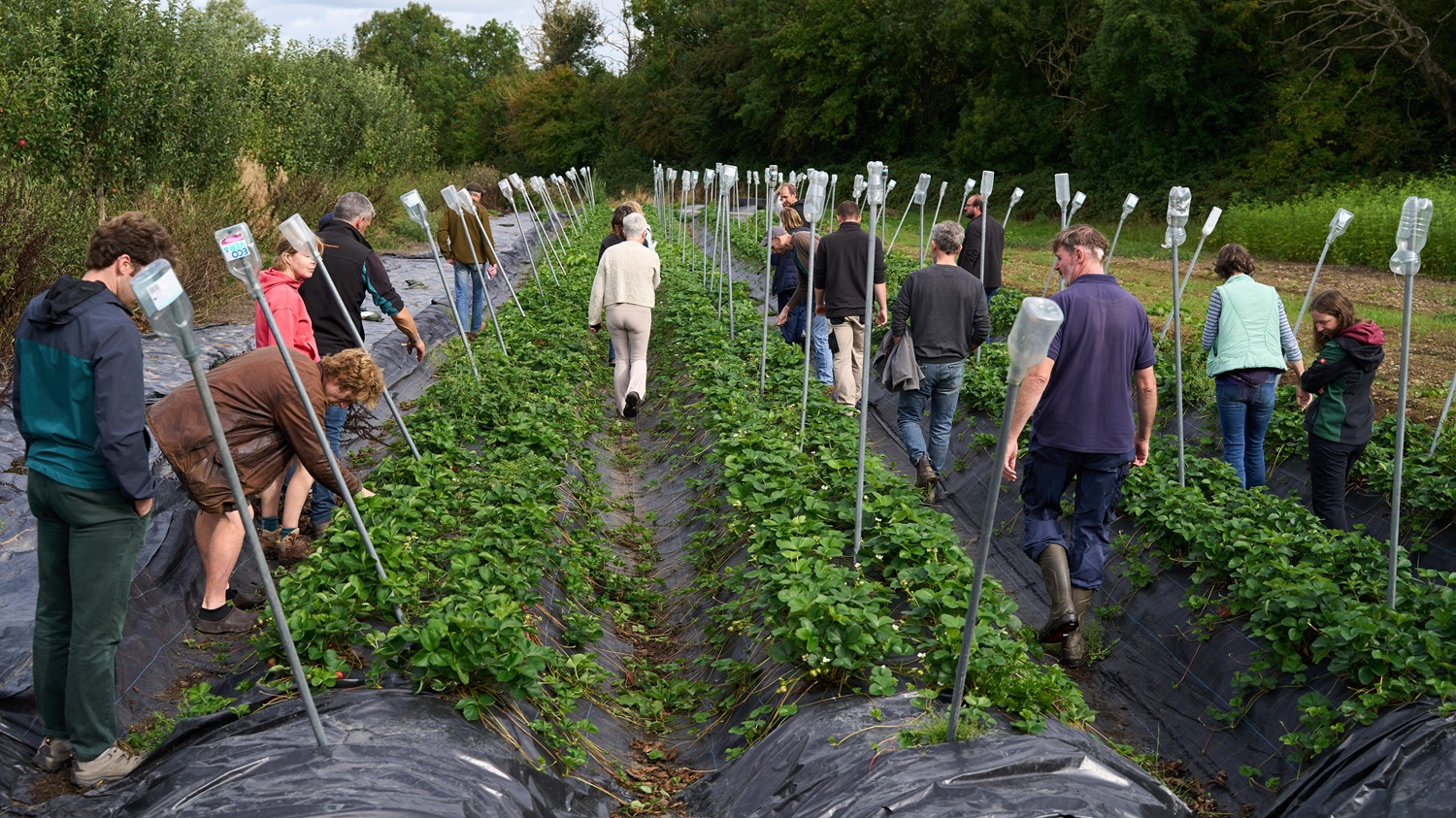
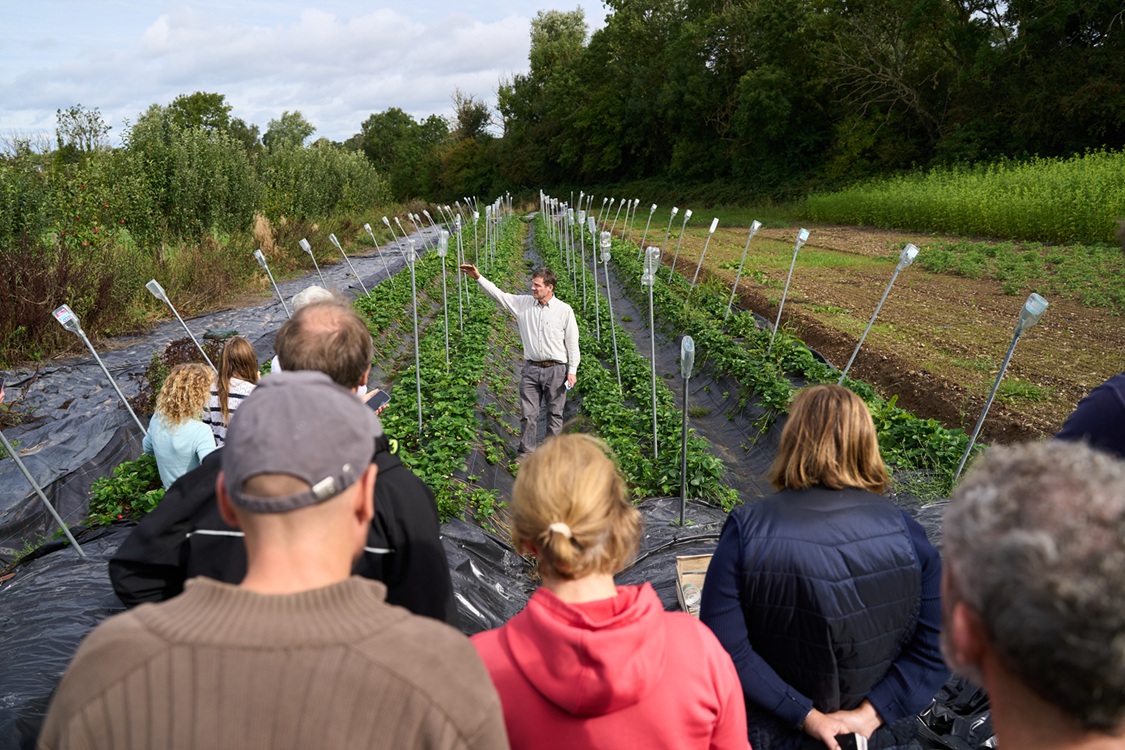
Following on from the tunnels, we arrived at the strawberry beds, where strawberries are grown on high ridged beds, which enables easy harvest as well as giving good circulation around the plants. A drip line run either side ensures good irrigation. They are productive for 6 weeks every year. The plants are replaced every 3 years and are most productive in their second year; by the third year the fruit produced is less tasty and more susceptible to disease.
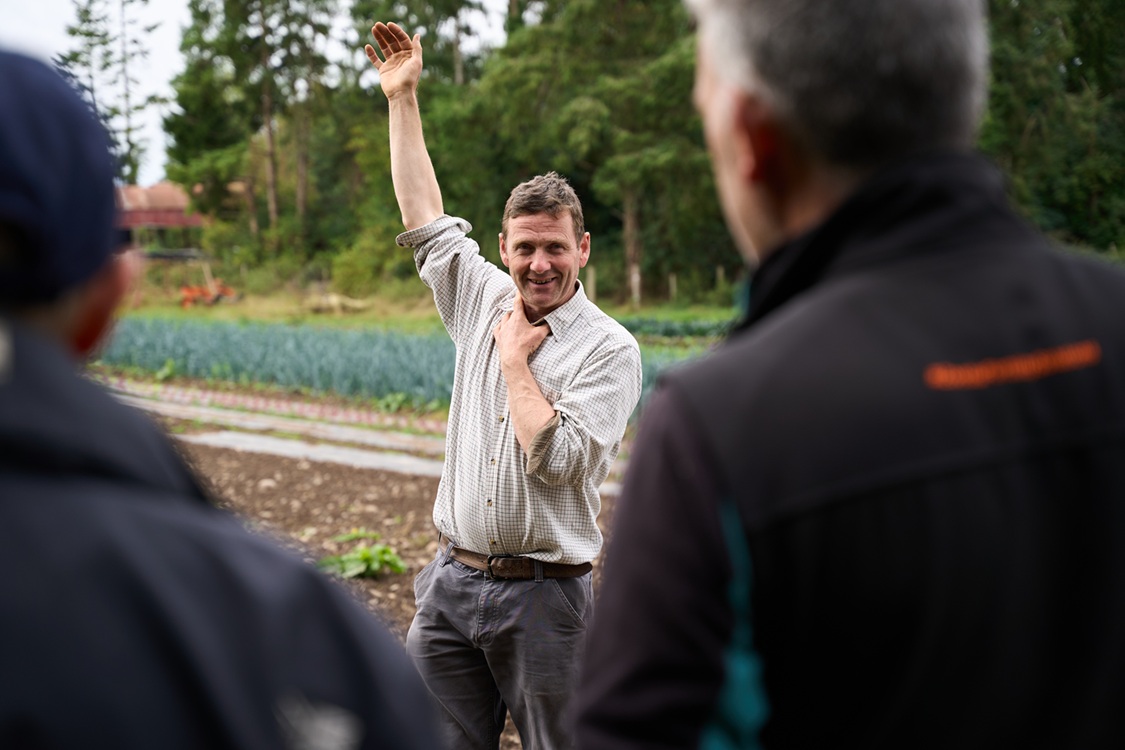
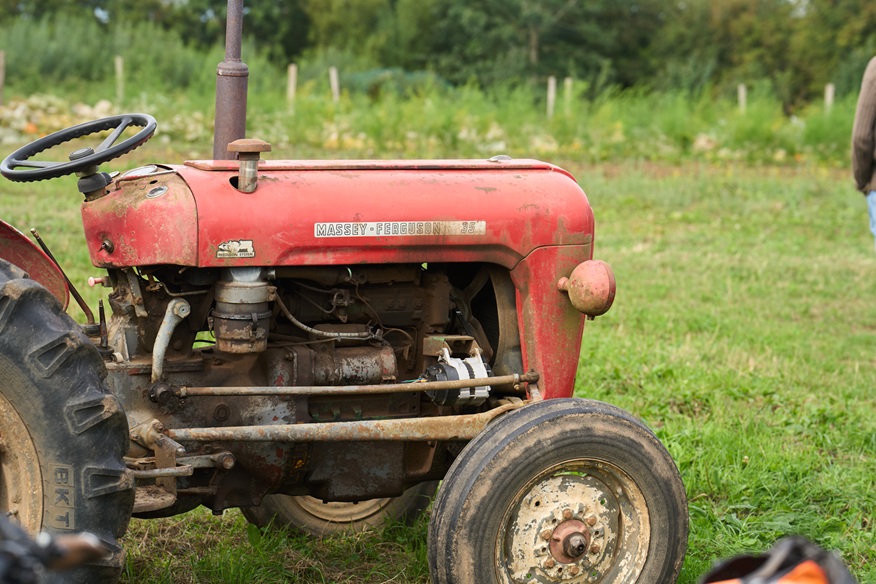
Out into the field, we learned that Liam runs a rotation of two years’ green manure followed by three years’ cropping. The green manure used is Italian rye grass and red clover. The star of the show in relation to machinery is a Massey tractor that belonged to Liam’s father and is still working perfectly. A small selection of attachments for the Massey rounds up the main machinery used on farm.
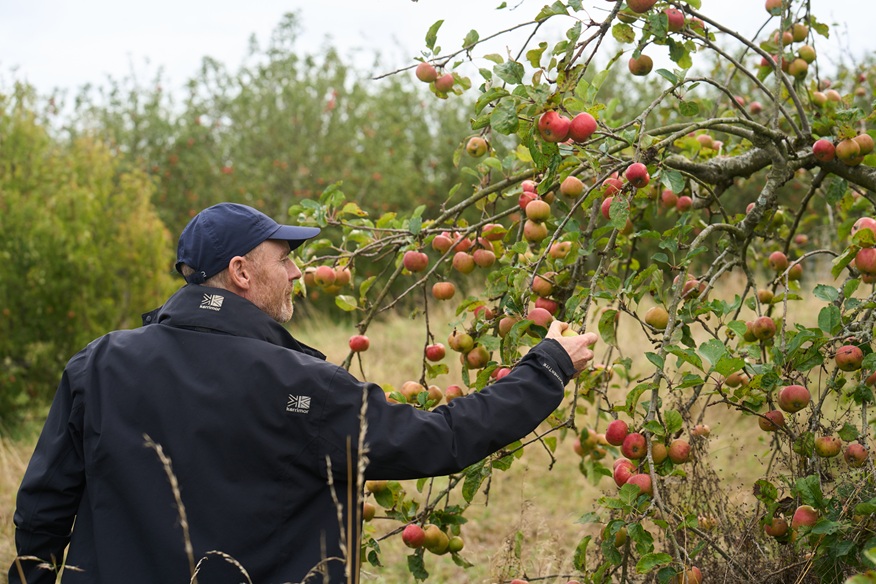
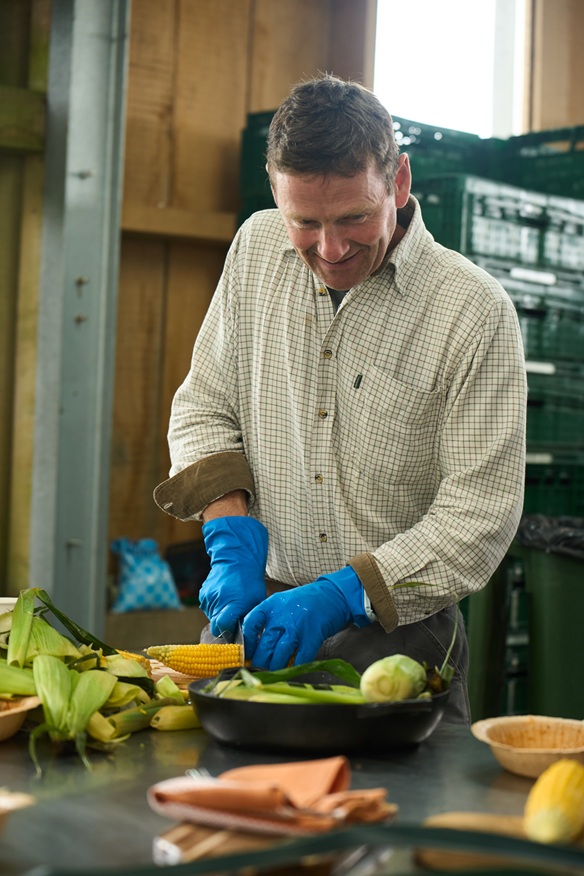
The rest of the fields were abundant with kale, asparagus, leeks, salad, sweetcorn and apples. Sweetcorn is by far the most popular crop to sell and has the best return. The variety used is “Samson,” and three different plantings, sown in trays four weeks apart, provide an abundance. The main issues with the corn are caused by wind, birds, and cold weather at the end of September, which results in the last crop not fully maturing. The crop was ready for harvest earlier than ever this year, by 7th of August.
The farm prefers to depend on WWOOFers to help with additional labour at key times, rather than go down the route of expensive machinery. Farming can be isolating, especially if there is a need to spend large amounts of time on your own on a tractor. Having WWOOFers on farm adds to the social aspect that the farm team enjoy. For many years they have hosted OGI interns, who add to the variety, enjoyment and fun of growing that goes with being part of the Moyleabbey team.
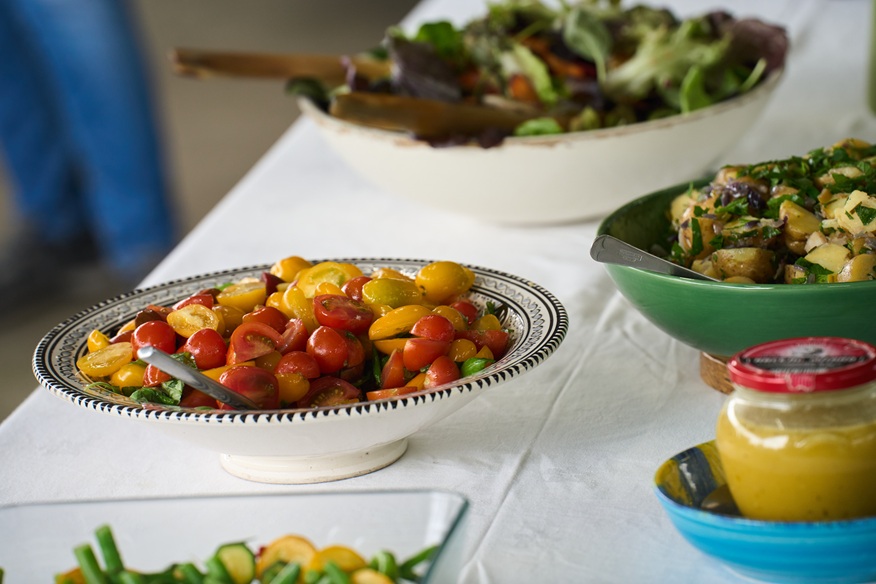
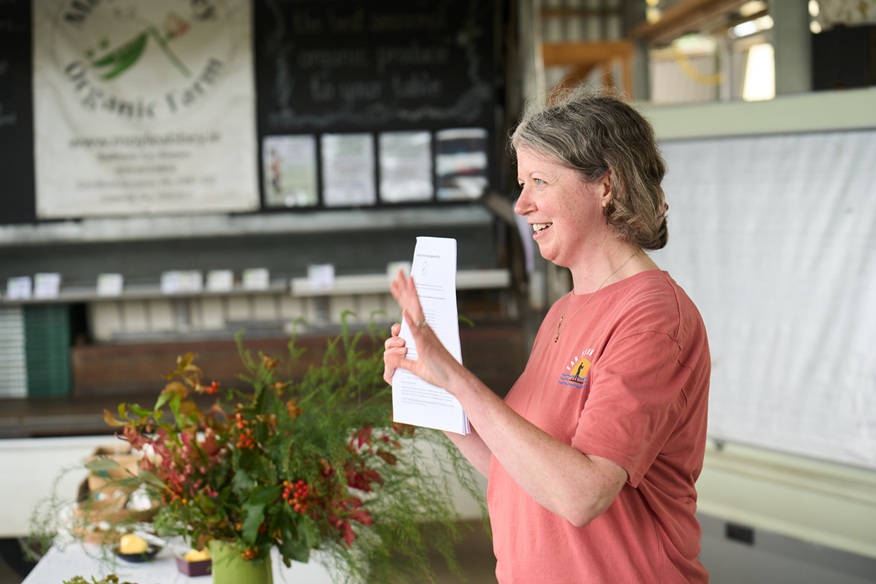
Back at the packing area, Louise talked us through the practicalities of direct selling. 40% of sales are through the shop at the farm, held on a Friday from 12–7pm, and the remaining 60% is through the market in Carlow on a Saturday. She stressed how important it is that customers are kept engaged, and the way they sell makes it very personal, as well as being good for feedback and building relationships. Some of the cornerstones of their customer connection are fostered through education and celebrating the seasons. The morning was rounded off spectacularly with a very generous organic lunch of soup, salad, and of course sweetcorn.
Moyleabbey really has created a one-stop shop for all organic needs. Some of the key takeaways from our visit were to simplify things, and make sure to protect yourself so that you can continue to grow!
Teagasc Oak Park Orchard
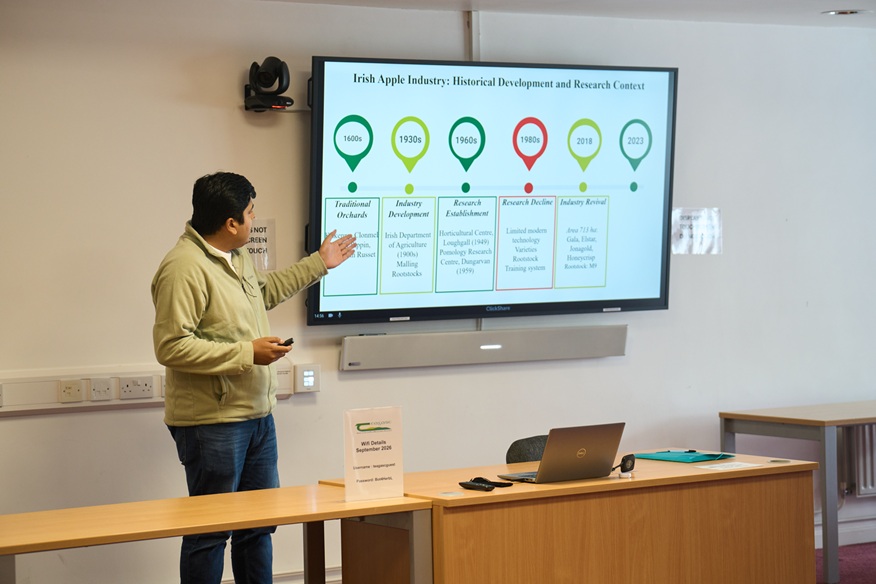
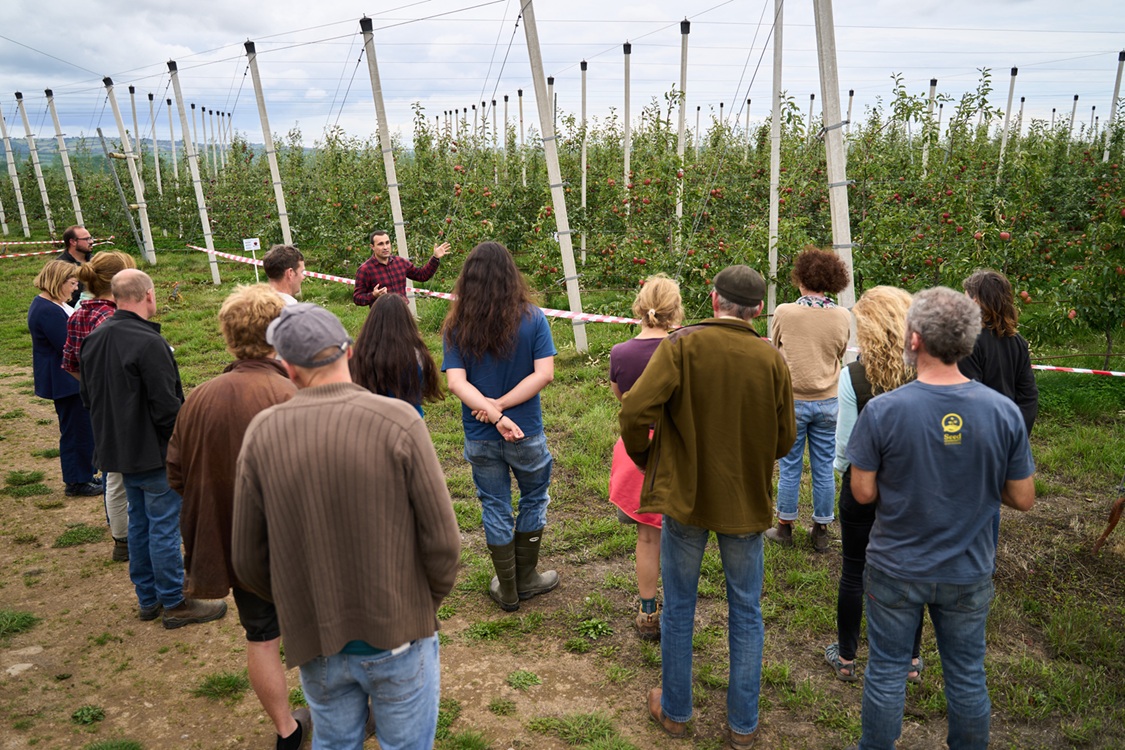
The afternoon was spent in a very different enterprise: the Teagasc Oak Park Orchard. Alberto Ruiz and his team accommodated us with a combination of presentations followed by a tour of the 1-hectare orchard.
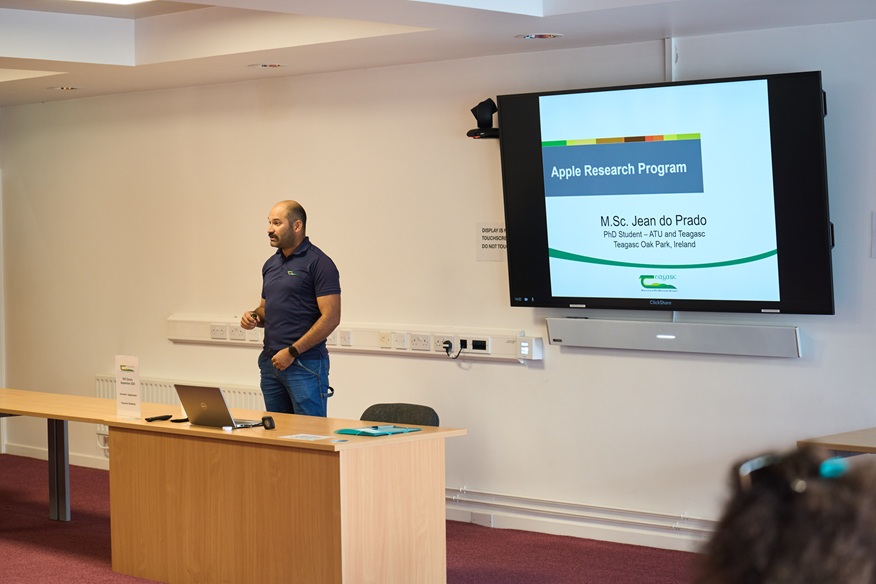
The presentations started with the Apple Research Programme, which aims to identify the best varieties of apples for the Irish climate as well as consumer and market needs. Part of the project is looking at the type of apple consumers prefer. Some of the key parameters included appearance, size, flesh firmness and sugar content. The annual consumption of apples in Ireland is 300 tonnes, while the annual production is 50 tonnes, highlighting the opportunity there is for growing.
The Efficient Apple Orchard Project is investigating the best varieties, rootstocks and training systems to use in an Irish setting, as well as practical information and guidelines for Irish growers on the best way to manage orchards. This includes looking at traditional and modern management options around thinning and pruning.
There is ongoing work investigating apple scab management, including the collection of samples from affected orchards around the country. Management from an organic perspective includes knowing the life cycle of the fungus and intervening to prevent spread where possible. The key point of note is that it is spread through wind and rain splash in early spring. The main method of control is integrated pest management, including pruning to keep trees light and airy and reduce stress, and mulching, shredding or removing dead leaves, which are a reservoir for reproduction of the fungus.
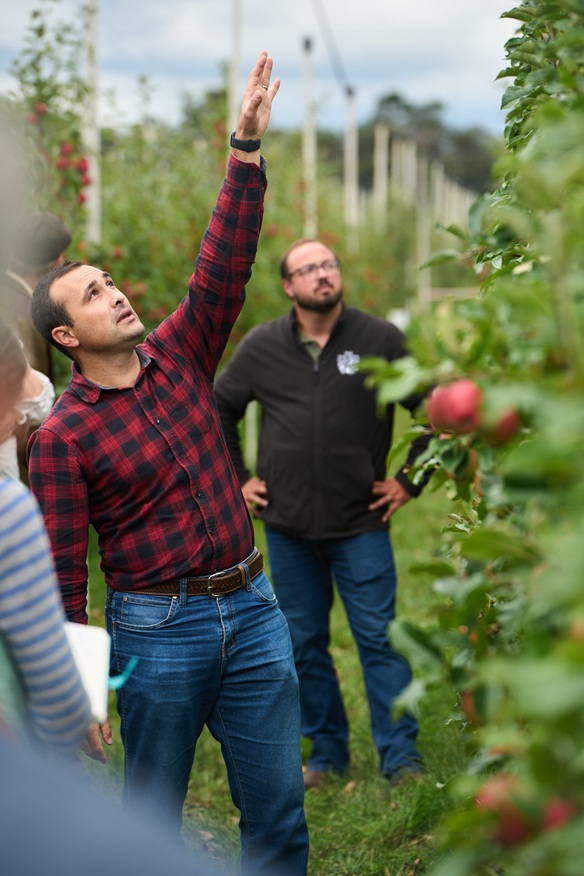
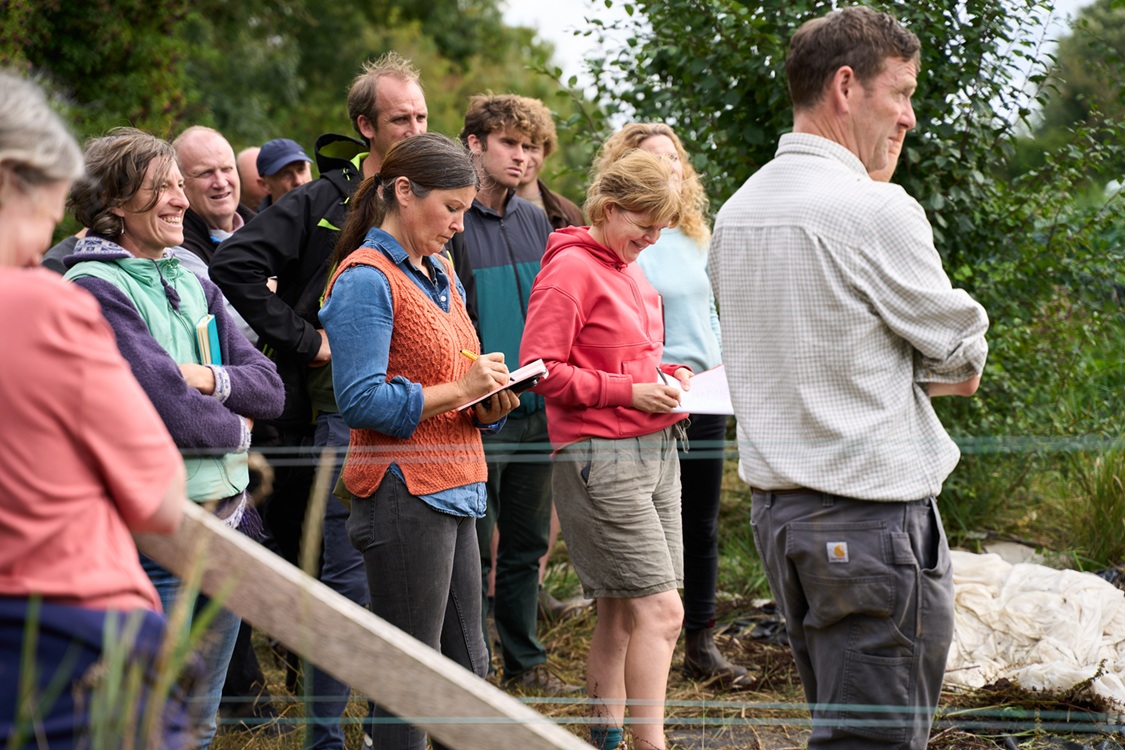
The presentations were followed by a tour of the orchard. It is four years old, with 50 different varieties growing. A variety of training systems were discussed, as well as the management within each system. The predominant rootstock used is M9.