OGI REPRESENTING ORGANIC GROWERS
Reflections from Feeding Ourselves 2026, Cloughjordan
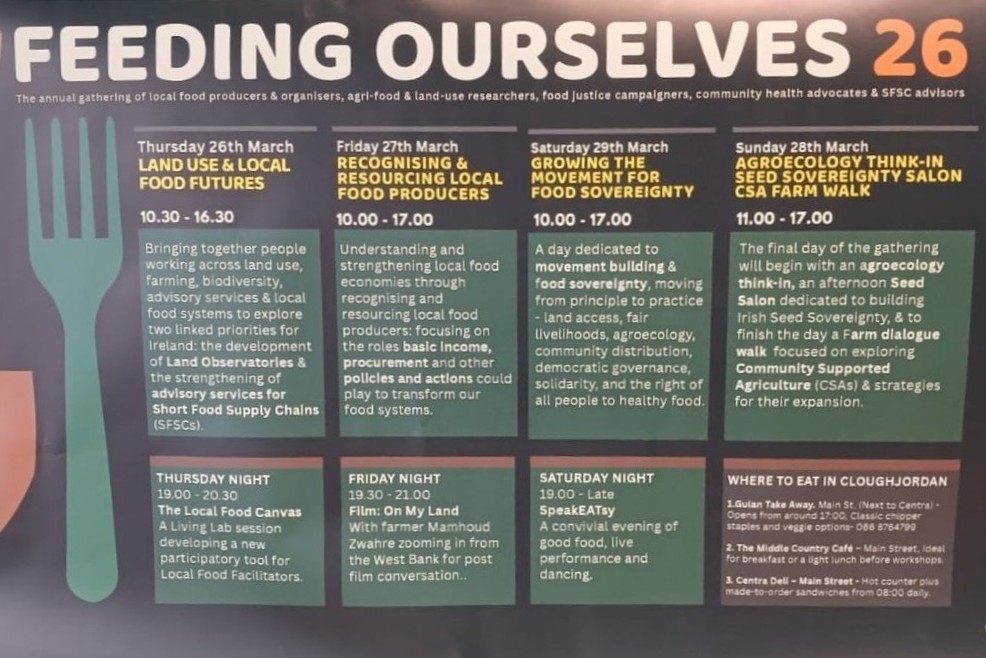
It was brilliant to be back in Cloughjordan this year for the annual Feeding Ourselves gathering, a unique space where local food producers, organisers, agri-food and land-use researchers, food justice campaigners, community health advocates and Short Food Supply Chain (SFSC) advisors come together.
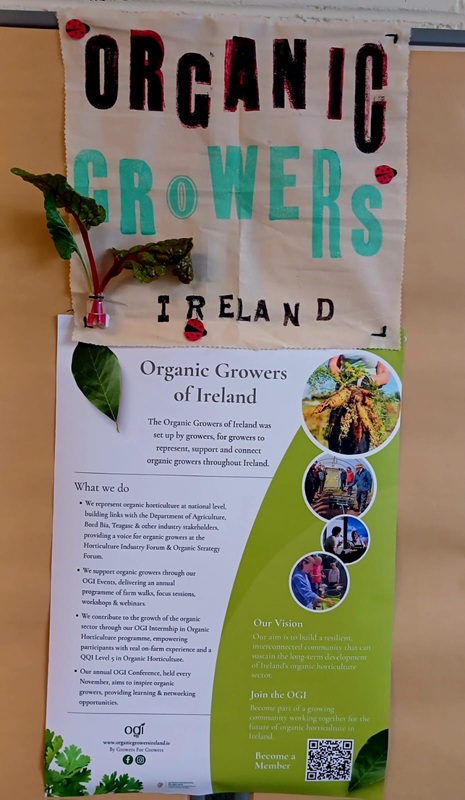
Over four days, participants shared challenges, explored solutions, and, just as importantly, built connections. Organic Growers of Ireland attended for two of the days. As always, the conversations between sessions were just as impactful as the inspiring panel discussions.
Now running for nearly 15 years, huge credit is due to Cultivate, Talamh Beo, and all those who continue to make this gathering happen.
Day 1: Land Use & Local Food Futures
Access to land remains one of the biggest barriers to growing Ireland’s organic horticulture sector. New entrants face significant challenges in securing suitable land, while existing growers struggle to expand.
Fintan Kelly, Land Use Officer with the Environmental Pillar, opened the day with a grounded and thoughtful overview of the EU Nature Restoration Law. While often framed as a point of tension between farmers and environmentalists, he highlighted the opportunities it presents, particularly the ‘low-hanging fruit’, such as focusing first on state-owned land. He also noted wider EU conversations around ‘simplification’ and deregulation, cautioning that the coming period may be as much about stopping poor policy directions as advancing good ones.
A key takeaway was the importance of building consensus. As we work towards climate targets, progress will depend on identifying and acting on areas where there is shared agreement.
Broader reflections throughout the day highlighted structural pressures shaping land use in Ireland, including the increasing concentration of land ownership, with a significant share of land sales now going to institutional investors, and ongoing pressure towards intensification of agriculture for export-oriented protein systems.
Another strand of discussion explored where we are in terms of food systems development, with Ireland still largely focused on shortening agricultural feed supply chains rather than fully developing diverse local food networks and direct producer-to-consumer systems.
Another standout contribution came from Sarah Prosser of Bioregioning South East Ireland, who spoke powerfully about the need to embrace complexity, entanglement, and fragmentation in how we approach land and food systems. Rather than relying on overly simplified, specialised models, she encouraged a more holistic way of thinking and farming. She also stressed that meaningful change depends on aligning top-down policy measures, such as the EU’s Land Observatory, with bottom-up, community-led action.
Bioregioning approaches explicitly work with this complexity and entanglement, rather than attempting to simplify or optimise systems in isolation.
Teagasc
It was really encouraging to see such a strong presence from Teagasc at the conference, with several contributions closely aligned to the wider theme of strengthening local and fairer food systems.
Áine Macken-Walsh shared updates on the Horizon Europe project COREnet (Connecting Advisors to a European Network for Consumer-Producer Chains). COREnet focuses on strengthening Short Food Supply Chains (SFSCs) by building a pan-European network of advisors and practitioners, supporting peer-to-peer learning and practical knowledge exchange to help scale local food initiatives.
She also highlighted its close relationship with the sister project EU4Advice (https://eu4advice.eu/), which works in parallel to strengthen advisory services, improve collaboration between producers, researchers and policymakers, and embed this knowledge within national Agricultural Knowledge and Innovation Systems (AKIS). In Ireland, this is also supported through the CAP Network Ireland 2023–2027, delivered through Irish Rural Link, ERINN Innovation and Munster Technological University.
A key insight from her presentation was the evolving role of advisors — not simply as technical experts, but as brokers connecting actors across the food system. Importantly, there is no one-size-fits-all model; advisory approaches must remain flexible, relational, and responsive to local contexts.
Joe Kelleher and Caitríona Scully also provided an update on the forward-thinking Short Food Supply Chain work underway within the Midwest Bioregion. They highlighted emerging opportunities in the region and noted that a dedicated website is due to go live shortly. Upcoming research will explore both the pros and cons of digital technologies for farmers and producers, as well as the feasibility of replicating Limerick’s Urban Co-op model in Galway — an exciting step toward scaling community-led food initiatives.
They also noted that current pilot initiatives such as buyers’ clubs and online ordering systems highlight both the potential and the fragility of these emerging short supply chain models, where viability often depends on achieving consistent weekly turnover to sustain coordination effort.
Overall, it was reassuring to see such strong engagement from Teagasc. As a widely trusted advisory body among conventional farmers, their involvement is critical. There is a clear drive within the organisation to upskill and evolve their services to better support the transition toward more resilient, equitable, and locally rooted food systems.
Day 2: Recognising & Resourcing Local Food Producers
Day 2 focused on Local Food Producers (LFPs), with a strong emphasis on the urgent need to better recognise and resource their role within the food system. A central message throughout the day was that strengthening local food production is key to reducing reliance on long, fragile supply chains and building resilience in the face of global shocks, while also restoring environmental balance and delivering clear benefits for public health through better, more nutritious diets.
Talamh Beo have been developing this work over the past number of years, drawing on examples such as the UK’s Basic Income for Farmers campaign. Their work explores how a Basic Income model could support farmers producing food in environmentally and socially beneficial ways, but who are often not adequately supported under existing systems.
Under the current Common Agricultural Policy (CAP), payments in Ireland are largely area-based. This means larger farms on more productive land receive the highest payments, while smaller-scale producers and those farming High Nature Value land often receive significantly less, reinforcing inequalities rather than supporting a just transition.
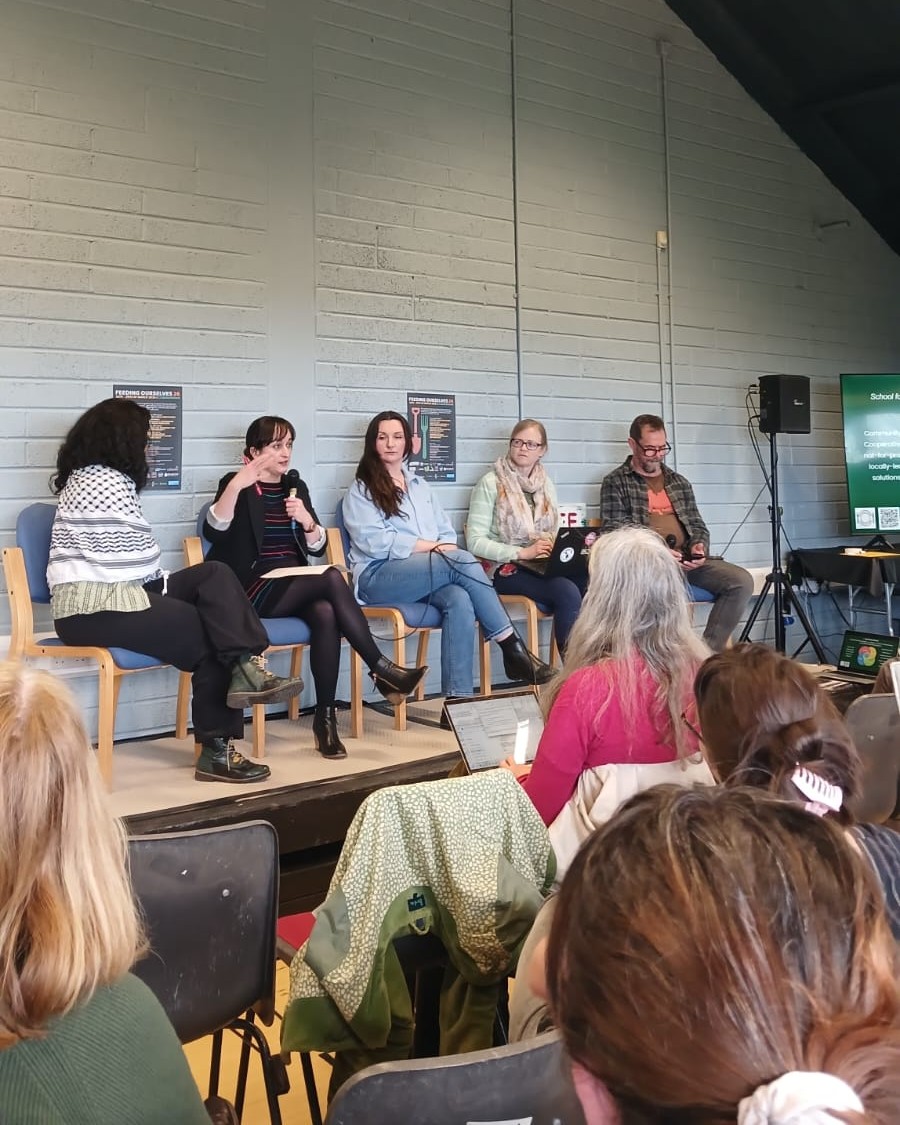
‘Recognising and Resourcing Local Food Producers’ framed the day’s discussions, with a range of approaches explored, from Basic Income to public procurement and community food hubs. A recurring point was the need to improve how local and direct selling food systems are supported and scaled, including greater visibility and accessibility of public procurement opportunities, along with training and guidance for producers to engage with them.
While the concept of a Basic Income for LFPs is still in its early stages, the focus was on moving from research into action and building momentum towards a campaign. As part of this work, Talamh Beo are also developing a clear definition of a Local Food Producer and the criteria that should underpin future supports. It was also noted that there are an estimated c.400 local food producers operating in Ireland, highlighting both the scale and importance of this sector.
In the ‘Voices from the Field’ session, Roger Ahern shared insights from Our Farm at Bushy Park in East Cork — a pilot initiative developed through Bioregioning SE Ireland. The project, launched in 2025, brings together a small group of local households in a community-supported farming model, similar to a CSA, inspired by the Dutch Herenboeren system. A small group of local households contribute financially, share in the harvest, and help shape the direction of the farm.
The model responds directly to key challenges in the current food system — including farmer income insecurity, limited public connection to farming and land, and unequal access to fresh, nutritious food. Roger spoke about how early-stage financial support has helped provide stability at this early stage, enabling the farm to establish, experiment, and grow, while also allowing for diversification of crops, local employment, and longer-term planning including potential educational work on farm.
Jenny Dagg of Maynooth University drew comparisons with Ireland’s Basic Income for the Arts, which was allocated via a lottery system and has shown strong positive impacts. Her research highlights how direct, unconditional supports can provide stability, enable creativity and innovation, and allow recipients to plan for the longer term, lessons that translate to local food producers.
Ruth Hegarty of Food Policy Ireland highlighted the need for children in Ireland to have access to nutritious food, and the clear opportunity to better connect the school meals programme with local producers, delivering benefits across health, farming livelihoods, and local economies.
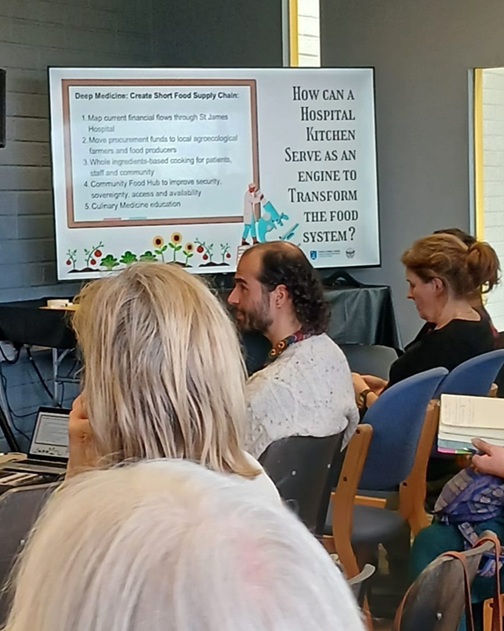
Dr. Rupa Marya of Trinity College Dublin spoke about a groundbreaking place-based pilot linking the Trinity School of Medicine, St James’s Hospital, and Bohemian Football Club’s farm initiative. The project aims to supply hospital kitchens with fresh, nutrient-dense food, while also demonstrating the level of systems change required, from infrastructure to mindset, to deliver what she described as a ‘delicious revolution’ in public food procurement, including trials with patients experiencing chronic illness and gut inflammation.
Jo Poulton of Basic Income for Farmers joined remotely to share updates on their work in the UK, including advocacy campaigns, pilot programmes such as ‘Grow More Growers’ and ongoing policy development.
There is no doubt that our current food system presents significant challenges. However, the range of voices, ideas, and energy in the room made one thing clear — the solutions already exist, what’s needed now is the will to adopt, support, and invest in them!
Kitty Scully, OGI General Manager